
Tax
How Should Wealth and Work Be Treated in the Tax Code?
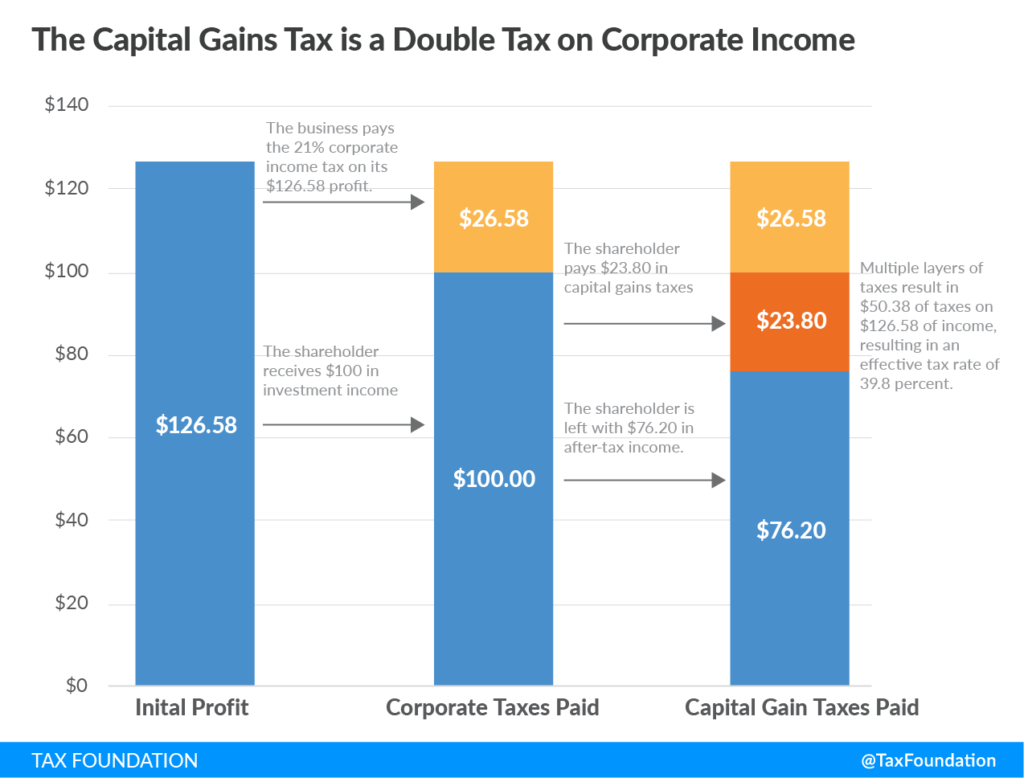
Late last week, Democratic presidential candidate Joe Biden released a piece reviewing his tax proposals, contrasting them with President Donald Trump’s tax ideas. A major theme within this piece can be summarized in the title: “A Tale of Two Tax Policies: Trump Rewards Wealth, Biden Rewards Work.” Biden raises an important question regarding how work…
Read MoreNew Census Data Shows States Beat Revenue Expectations in FY 2020
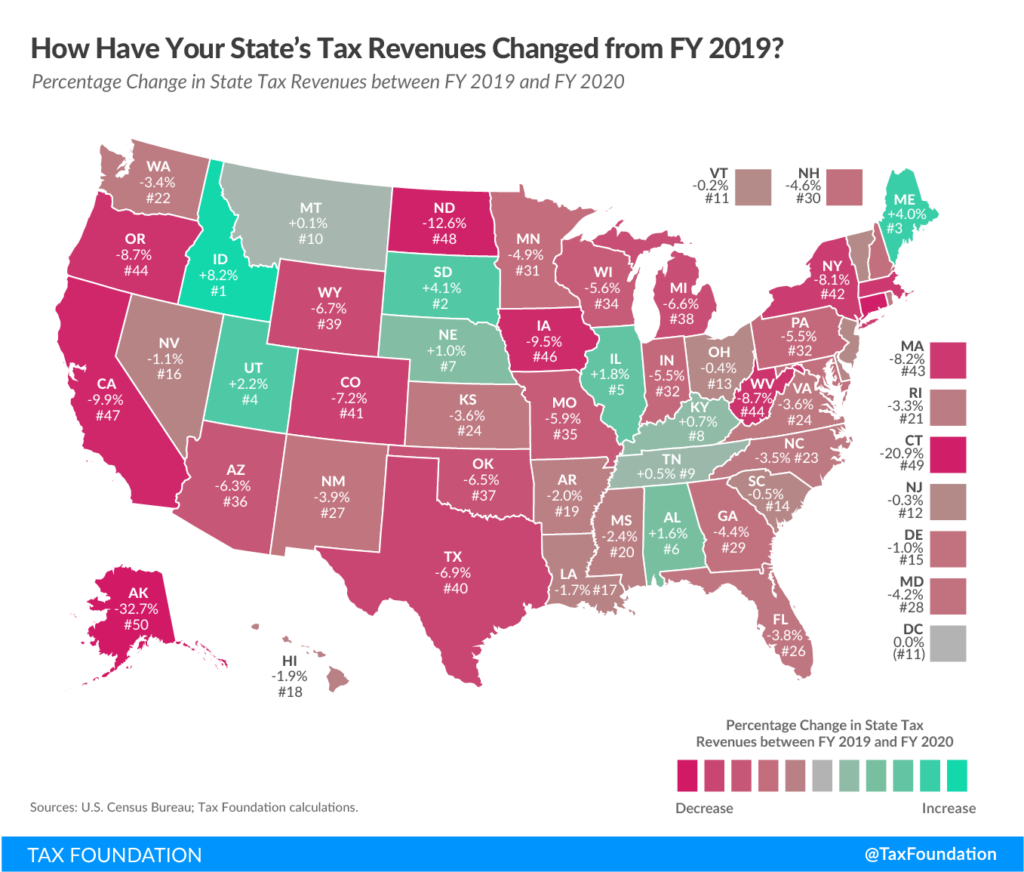
Key Findings State tax collections declined 5.5 percent in FY 2020 according to new Census data, though actual losses are likely to be significantly lower after accounting for the shifting of income tax collections into the current fiscal year due to delayed tax filing deadlines. After a sharp initial drop under stay-at-home orders, sales tax…
Read MoreMore Countries Target the Property Tax
A recent report from the Organisation for Economic Co-operation and Development (OECD) on tax reforms during the past year reveals a tendency towards higher property taxes, often in the form of base broadening, tax rate increases, or both. Even though countries have increasingly targeted property taxes as a source of revenue, on average, they still…
Read MoreAn Excise State of Mind
As the economic crisis driven by the pandemic has continued, a troubling trend in tax policy discussions has arisen. It is common these days to hear finance ministers refer to tax increases that would be narrowly targeted at a particular business model or industry simply based on the fact that those businesses appear to be…
Read MoreNew European Commission Report: VAT Gap
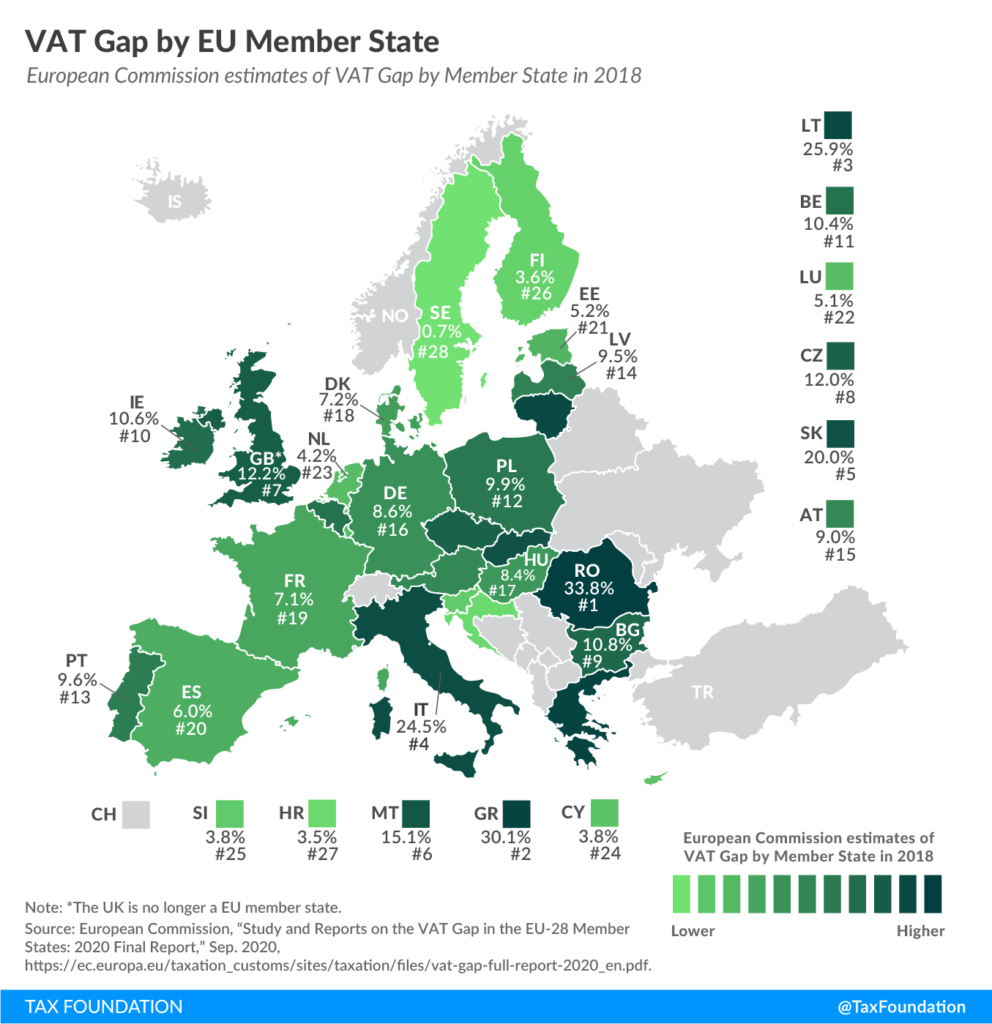
In 2017, Value-Added Tax (VAT) accounted for 62.3 percent of consumption tax revenues in the OECD on average, making it an important source of government revenue. The European Commission (EC) recently published the latest version of their annual report on the “VAT Gap” in 2018 for the 28 Member States of the European Union at…
Read MoreDoes Your State Have an Individual Alternative Minimum Tax (AMT)?
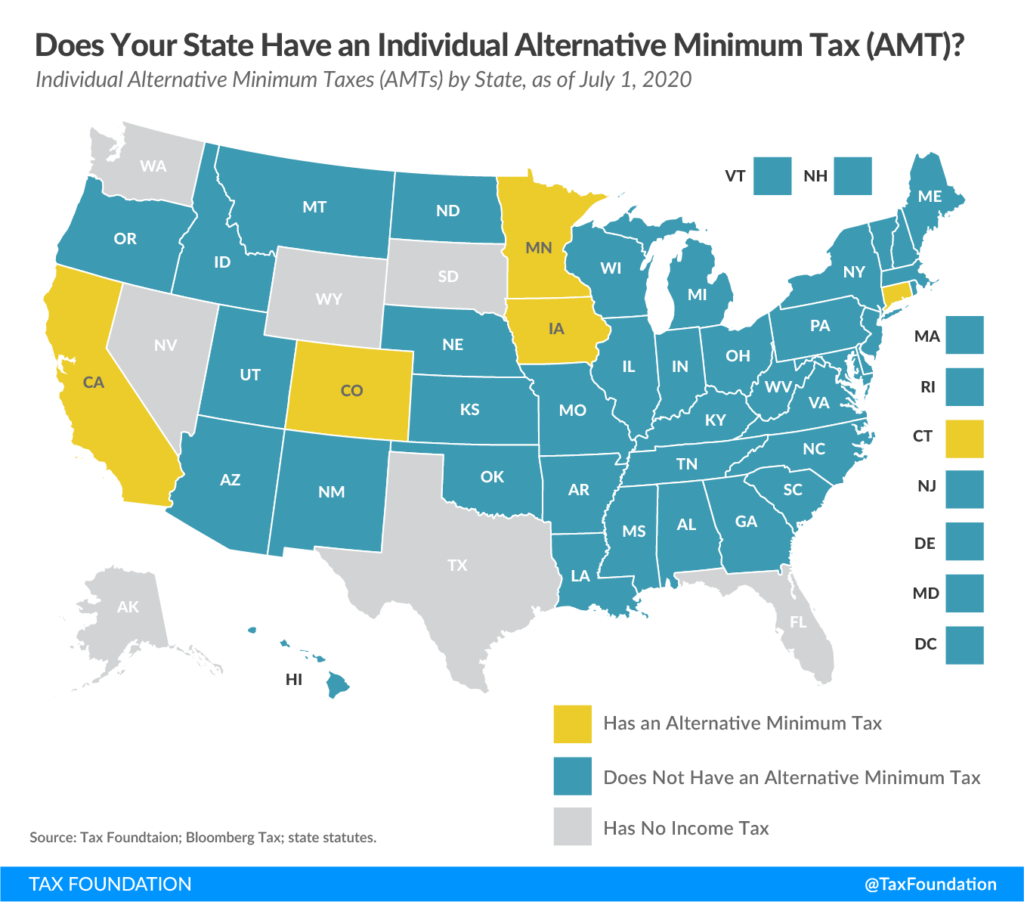
This week’s map shows the five states that have an Alternative Minimum Tax (AMT) in their individual income tax codes: California, Colorado, Connecticut, Iowa, and Minnesota. Under an individual AMT, many taxpayers are required to calculate their income tax liability under two different systems and pay the higher amount. The federal AMT was created in 1963, after Congress discovered…
Read MoreA New Study Suggests Congress Could Raise Money By Increasing Capital Gains Tax Rates To 47 Percent. But There Is A Catch
Democratic presidential candidate Joe Biden has proposed raising tax rates on long-term capital gains income for the highest-income investors from the current 23.8 percent to…
Read MoreUnemployment Benefits Are Taxable Income: That May Reduce EITC Refunds Next Spring
Many low- and moderate-income households no doubt were assisted greatly by enhanced federal unemployment insurance benefits that they received earlier this year and would be…
Read MoreNew York Stock Exchange Signals Willingness to Relocate Servers to Avoid Proposed New Jersey Financial Transaction Tax
September 26th, a Saturday, is an ominous day for New Jersey lawmakers hoping to generate billions of dollars in annual revenue from a financial transaction tax targeting New York-based stock exchanges that currently rely on electronic infrastructure located across the river in New Jersey. On that day, all the U.S.-based exchanges will simulate a day’s…
Read More