
Tax
Where Do People Pay the Most in Property Taxes?
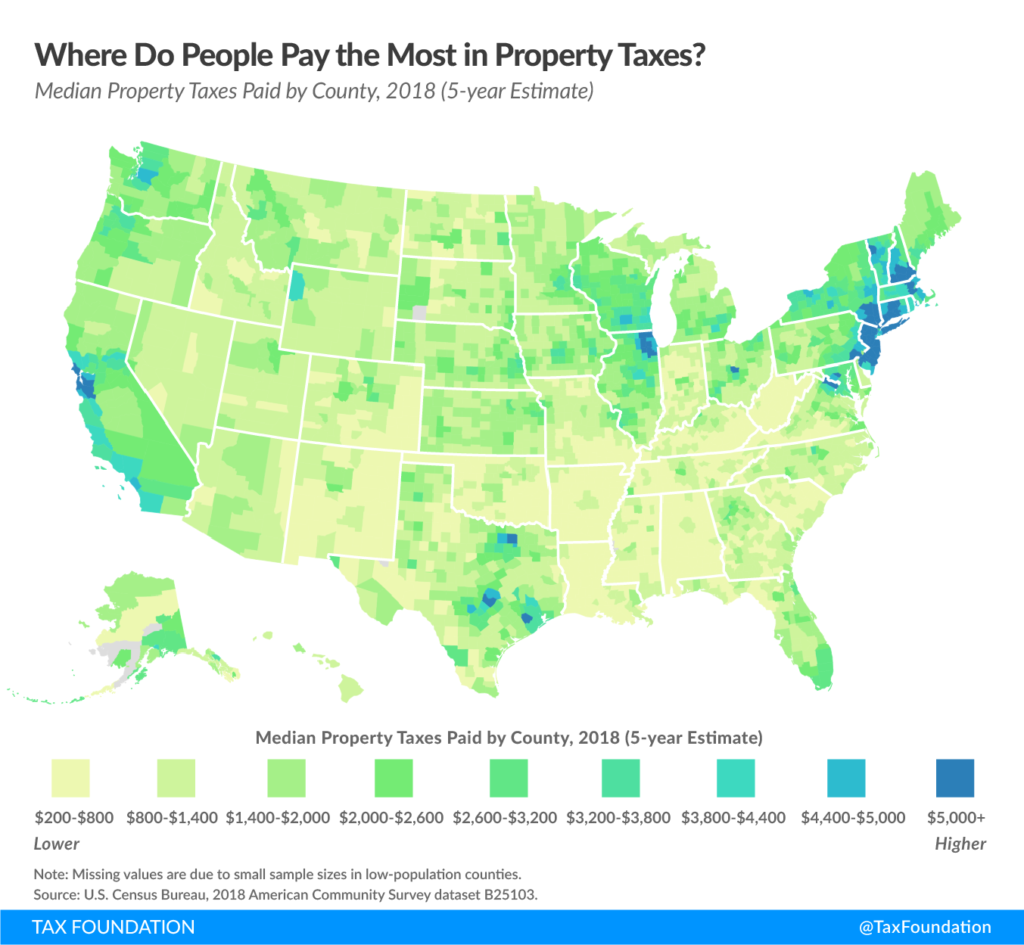
Property taxes are an important tool to help finance state and local governments. In fiscal year 2017, property taxes comprised 31.9 percent of total state and local tax collections in the United States, more than any other source of tax revenue. In that same year, property taxes accounted for a whopping 72 percent of local…
Read MoreNew Accelerated Depreciation Policies to Spur Investment in Australia, Austria, Germany, and New Zealand
Countries around the world are experiencing a sharp downturn in economic activity as an impact of the COVID-19 health crisis. To cushion the immediate liquidity effects of containment and mitigation policies, governments responded rapidly with emergency tax and fiscal policy measures. As these short-term measures are starting to expire, policymakers are increasingly looking at mid-…
Read MoreFines and Forfeitures and Racial Disparities
Increasingly visible instances of police violence against Black people in the United States have sparked nationwide protests and calls to defund the police or to…
Read MoreContrary to Popular Belief, Value-Added Taxes Found to Be Slightly Progressive
Up until now value-added taxes (VAT) were considered to be highly regressive taxes. Numerous studies have found that VAT appears to be regressive when measured as a percentage of current income. Nevertheless, a recent OECD paper used household expenditures microdata from 27 OECD countries to reassess this often-made conclusion that VAT is regressive. Value-added taxes…
Read MoreNebraska’s Property Tax Compromise Provides Temporary Relief, but Structural Reform Is Still Needed
On the last day of Nebraska’s recently reconvened 2020 legislative session, legislators today granted final approval to LB1107, a bill to provide state income tax relief to help offset local property taxes paid, as well as to make adjustments to Nebraska’s business incentives program. This compromise is the result of many months of negotiations in…
Read MoreEconomic Recovery and Deductions for Worker Training
Yesterday, Scott Pulsipher and Michael B. Horn wrote on RealClearPolicy.com, “An obstacle to employers investing more in their employees’ education is that Section 127 of the tax code has been frozen in time since 1986.” Section 127 allows employers to provide up to $5,250 annually for worker education costs that can be tax-deductible and excludable…
Read MoreSenator Kamala Harris Proposed A Bold Tax Credit To Help Low- And Middle-Income Workers
As a Senator, Kamala Harris has proposed broad legislation designed to raise the incomes of low- and middle-income workers via her LIFT (Livable Incomes for…
Read MoreInventory Valuation in Europe
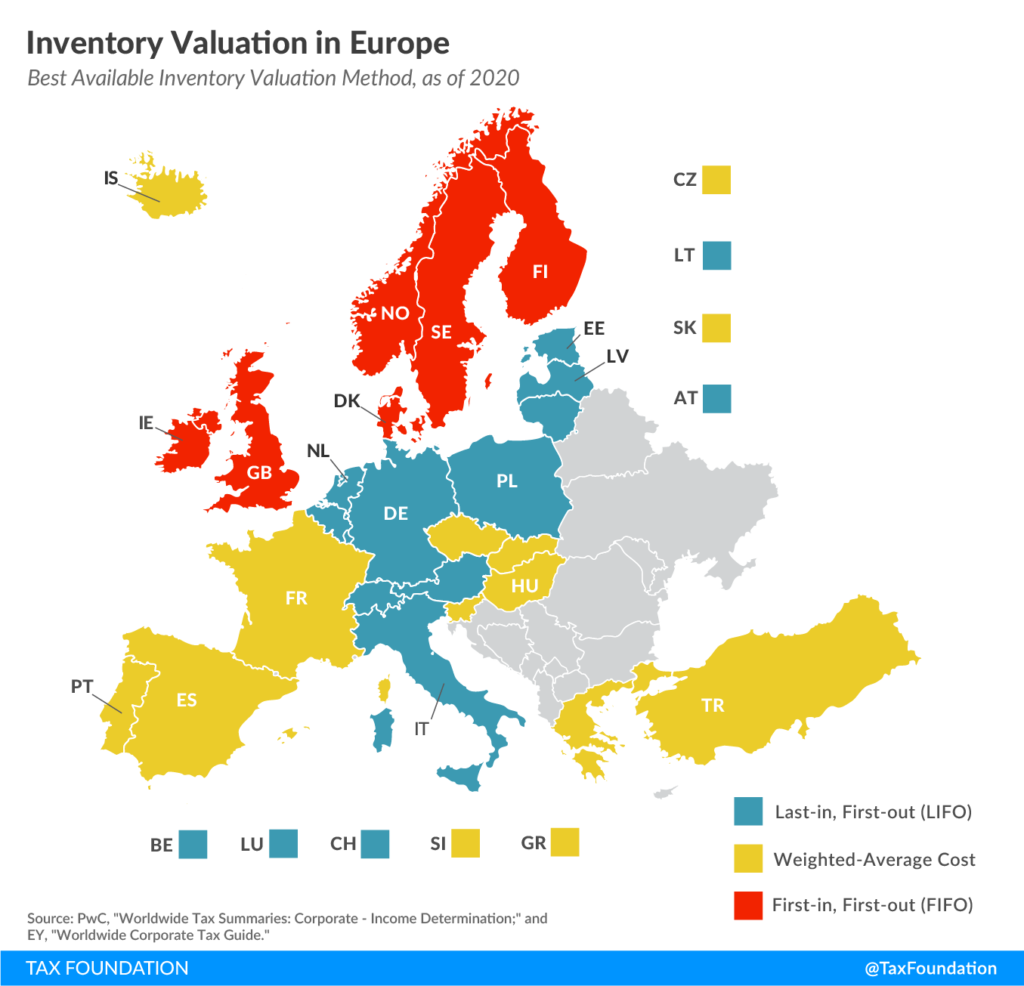
As with capital investment, businesses cannot immediately deduct the full cost of inventory purchases against taxable income. Instead, the cost of inventories is deducted when sold. The deduction amount depends on the inventory valuation method. Today’s map shows which of the three inventory valuation methods European OECD countries require their businesses to use for tax…
Read MoreTeleworking Employees Face Double Taxation Due to Aggressive “Convenience Rule” Policies in Seven States
Key Findings When a person lives in one state but works in another, they may have tax liability in both states, but typically receive a tax credit to eliminate double taxation of that income. Seven states, however, tax people where their office is even if they do not actually work in the state, and these…
Read More