
Tax
Three Reasons Expanding Credits Aren’t the Best Pandemic Response for the Vulnerable
Tax policy wonks often advocate for increases in refundable tax credits (e.g., Child Tax Credit, CTC and Earned Income Tax Credit, EITC) and nonrefundable tax credits (Child and Dependent Care Tax Credit, CDCTC) as one solution to help low-income Americans. Arguments in favor of expanding these tax credits appear during economic expansions and contractions alike.…
Read MoreWine Taxes in Europe
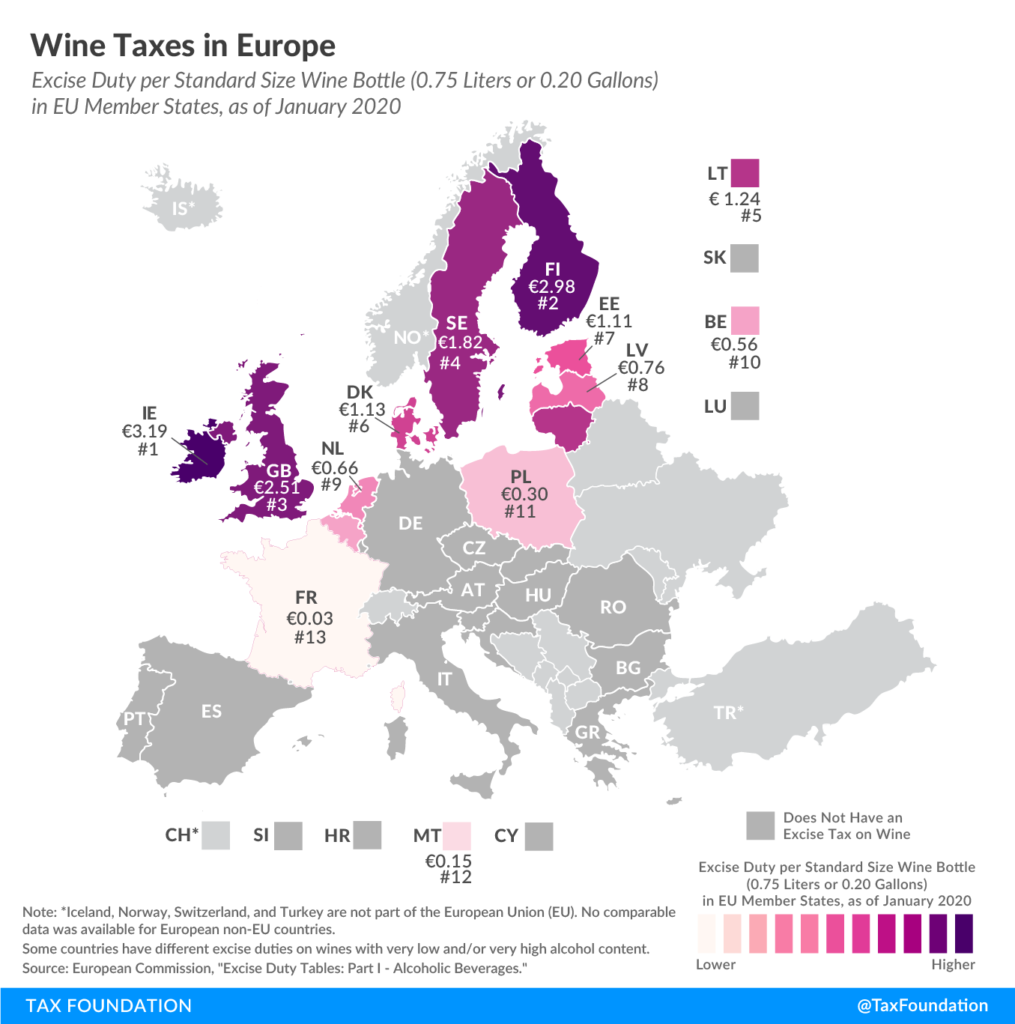
This is the beginning of a map series in which we’ll explore different types of excise taxes, starting with excise duties on wine. If you have ever wondered about the tax consequences of opening a bottle of wine—yes, there is a tax angle to everything—today’s map will provide you with some insights. As one might…
Read MoreHow High are Wine Taxes in Your State?
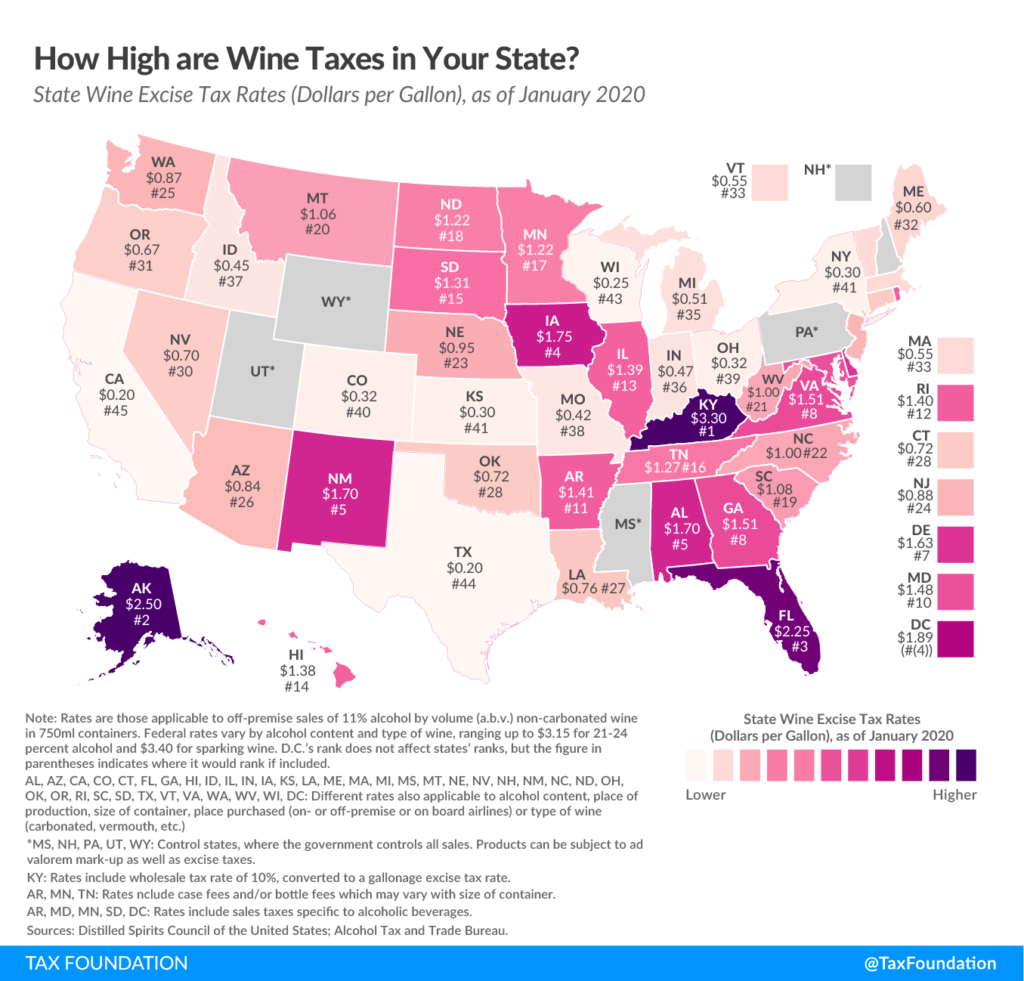
Whether you’re a self-appointed connoisseur or an occasional sipper of chardonnay, you may not have thought about the taxes that go into your wine purchase. But now you can quench your newly found thirst for excise tax info with this week’s map, which compares wine taxes among the 50 states, expressed in dollars per gallon.…
Read MoreEconomic Analysis of Financing Options for Infrastructure Spending Proposals
As the economic recovery is debated amid the coronavirus pandemic, there have been growing calls to include additional public investment in infrastructure such as transportation, airports, buildings, and broadband. Many have argued that the United States has outdated infrastructure and that has weakened the nation’s economic productivity and global competitiveness. As policymakers start thinking about…
Read MoreWhy Neutral Cost Recovery Is Good for Workers
The COVID-19 pandemic has damaged the American economy, as unemployment has skyrocketed. Despite job growth in May, the unemployment rate still sits at more than 13 percent, its highest point since the Great Depression. But even before the pandemic, American workers had experienced slow wage growth, for a variety of reasons. Policies to create jobs…
Read MoreWhen Marriage Doesn’t Pay: Analysis and Options for Addressing Marriage and Second-Earner Penalties
Key Findings In nearly two of every three households in America with dependents, more than one person works to make ends meet. In many cases, when two workers file jointly, they are penalized for having a second earner in the household. This is because the second-earner’s wages are subject to a higher marginal tax rate.…
Read MoreGlobal Tax Relief Efforts Vary in Scope and Time Frame in Response to COVID-19
Countries around the world have implemented and continue to implement emergency tax measures to support their economies during the coronavirus (COVID-19) crisis. Providing tax relief to the people and companies that are most affected, until the emergency abates, is welcome, as the health issue has created a substantial economic shock. Taxes that require regular payments…
Read MoreLatest Data Shows That the Tax Cuts and Jobs Act Did Not Dampen Charitable Giving
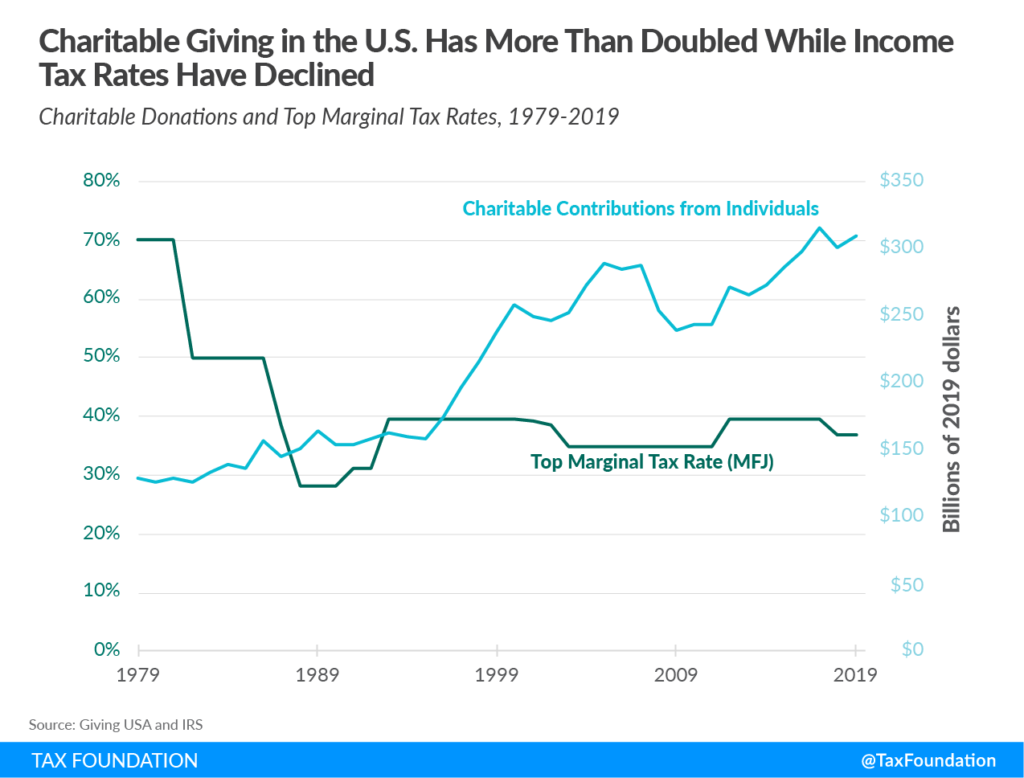
Americans are very generous people, and they give despite the reduced tax benefits of giving. That’s the takeaway from Giving USA’s latest annual report on the charitable contributions of individuals, corporations, and foundations. Altogether, Americans contributed nearly $450 billion to charitable causes in 2019. This is a record level of giving in nominal terms; adjusting…
Read MoreShould Congress Pump Money Into Businesses By Shifting The Timing Of Tax Benefits?
Should Congress manipulate the timing of business tax benefits to support firms in the midst of the COVID-19 economic slump? And if so, how?
Read More