
Tax
Full Expensing is Good for the Short Run and the Long Run
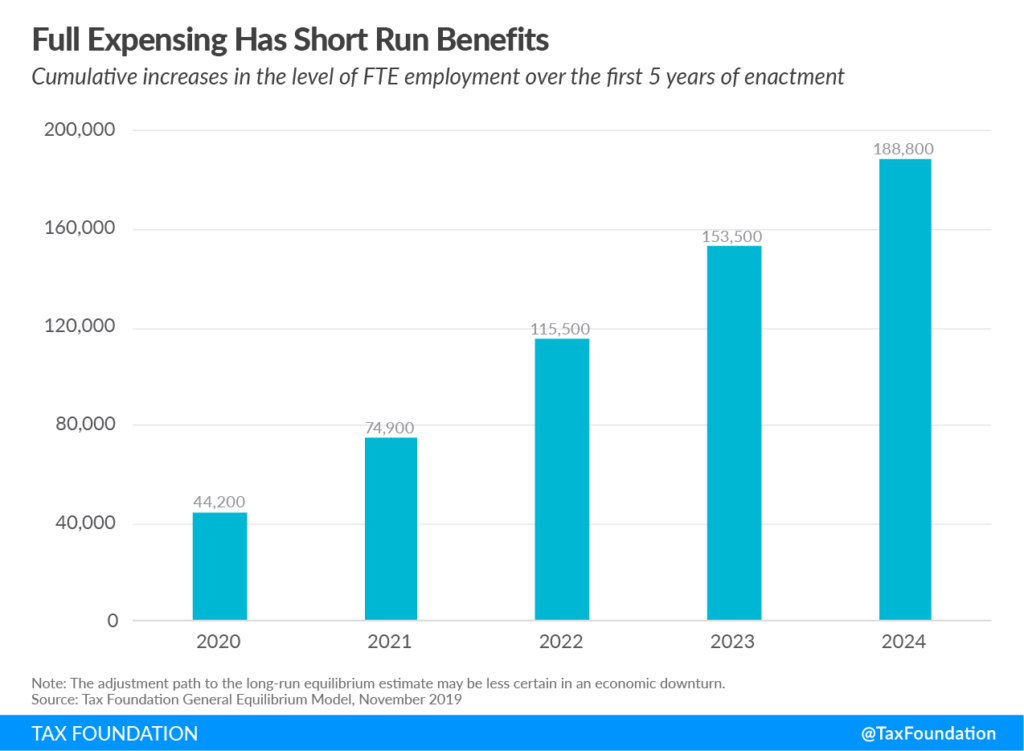
Full expensing for capital investment is being considered in the upcoming fourth round of coronavirus relief legislation. Though we tend to talk about full expensing as a long-run policy with long-run benefits, that does not mean it is meaningless in the short term. In fact, full expensing is good for both the long run and…
Read MoreMichigan Vapor Tax Bill Gets It Half-Right
In line with the nationwide trend of taxing vapor products, the Michigan Senate has passed a new 18 percent tax on vapor products. These taxes are often intended to achieve a two-fold goal: deterring youth use and raising revenue. The Michigan bill is no exception. On Wednesday, SB781 passed the Senate on a 33-5 vote.…
Read MoreCARES Act Conformity Would Promote Economic Recovery in Nebraska
Some Nebraska senators have recently proposed decoupling from the Coronavirus Aid, Relief, and Economic Security (CARES) Act’s tax relief provisions in order to use that revenue for property tax cuts. Because Nebraska conforms with the Internal Revenue Code (IRC) on a rolling basis, the state automatically incorporates federal tax changes into its own tax code…
Read MoreCapital Gains Tax Rates in Europe
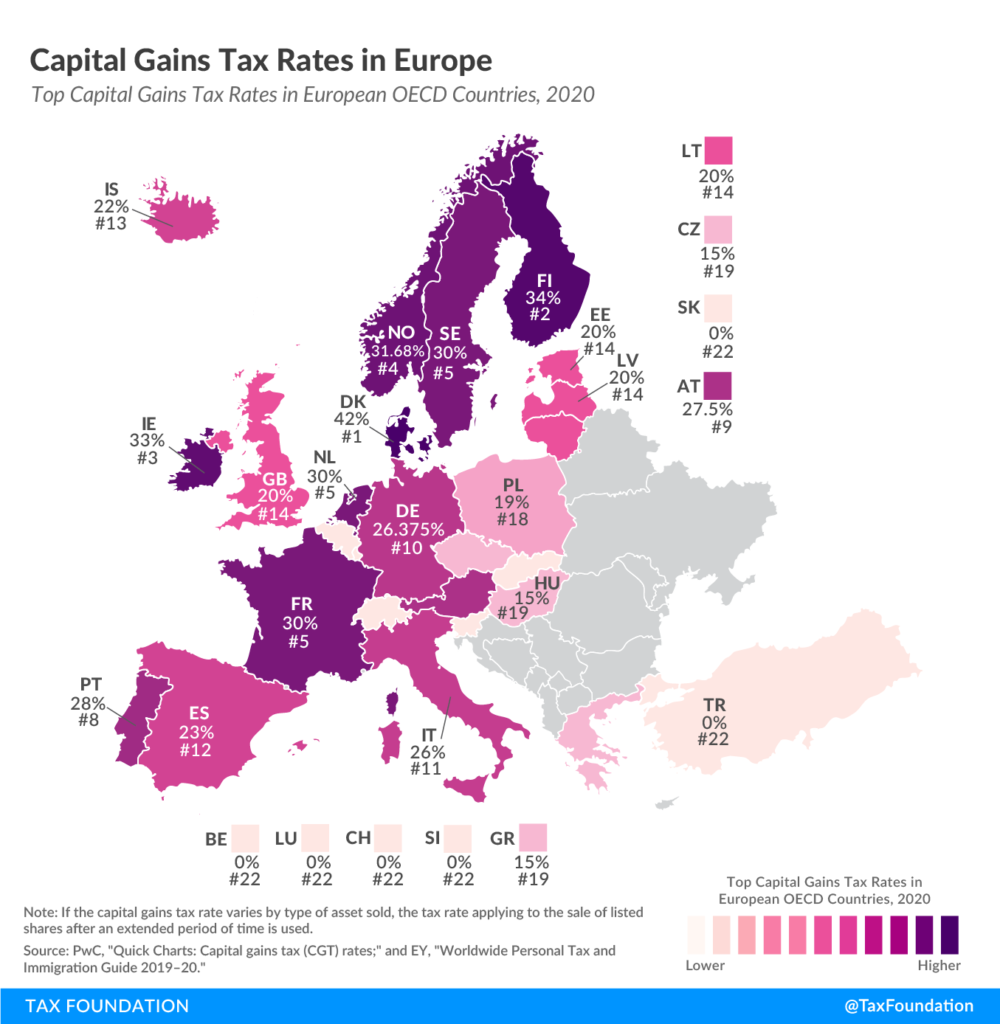
In many countries, investment income, such as dividends and capital gains, is taxed at a different rate than wage income. Today’s map focuses on how capital gains are taxed, showing how capital gains tax rates differ across European OECD countries. When a person realizes a capital gain—that is, sells an asset for a profit—they face…
Read MoreCautionary Notes from CBO on the Effects of Federal Investment
There has been a considerable amount of talk recently from both the White House and Congress on the potential for a major federal infrastructure bill. While there are few details on what such a compromise would entail, the projects could run the gamut from roads and bridges to public schools and VA hospitals. There seems…
Read MoreA Blow to Pillar 1
Today it was reported that Treasury Secretary Steven Mnuchin sent a letter to the finance ministers in the United Kingdom, France, Italy, and Spain communicating concerns the U.S. government has with ongoing OECD negotiations on international tax rules. Those concerns have led the U.S. to withdraw from the negotiations. U.S. Trade Representative (USTR) Robert Lighthizer,…
Read MoreAnswering Four Questions About How Neutral Cost Recovery Works in Practice
Lawmakers can improve the cost recovery treatment of capital investment by allowing full expensing or by approximating full expensing by adjusting depreciation deductions to equal the present value of full expensing. This latter approach of capital cost indexing (sometimes called a neutral cost recovery system or NCRS) lowers the short-term cost of the policy to…
Read MoreStates Should Conform to These Four CARES Act Provisions to Enhance Business Liquidity
The Coronavirus Aid, Relief, and Economic Security (CARES) Act, signed into law on March 27, is providing critical relief to individuals and businesses that have been economically impacted by the COVID-19 pandemic. In addition to providing financial assistance to individuals and loans to businesses, the CARES Act made several structural adjustments to the tax code…
Read MoreWhat the Internet Can Teach Us About Capital Investment, Infrastructure, and Tax Policy
The lockdowns imposed in response to the COVID-19 pandemic induced an increase in demand for broadband internet, as work from home and other social distancing measures pushed people to spend more time online. As broadband becomes a more important piece of America’s infrastructure, it makes sense to look at tax policy that will help drive…
Read More