
Tax
In Some States, 2020 Estimated Tax Payments Are Due Before 2019 Tax Returns
When it comes to tax deadline extensions that have occurred in response to the COVID-19 pandemic, deadlines for filing and paying 2019 income taxes have received much of the public attention. However, self-employed individuals, investors, and others who receive income from sources other than an employer must also pay attention to changes in quarterly estimated…
Read MoreTPC Estimates The HEROES Act Would Substantially Cut Individual Income Taxes
The major individual income tax provisions in the House-passed Health and Economic Recovery Omnibus Emergency Solutions (HEROES) Act would cut taxes by an average of…
Read MoreTax Relief for Families in Europe
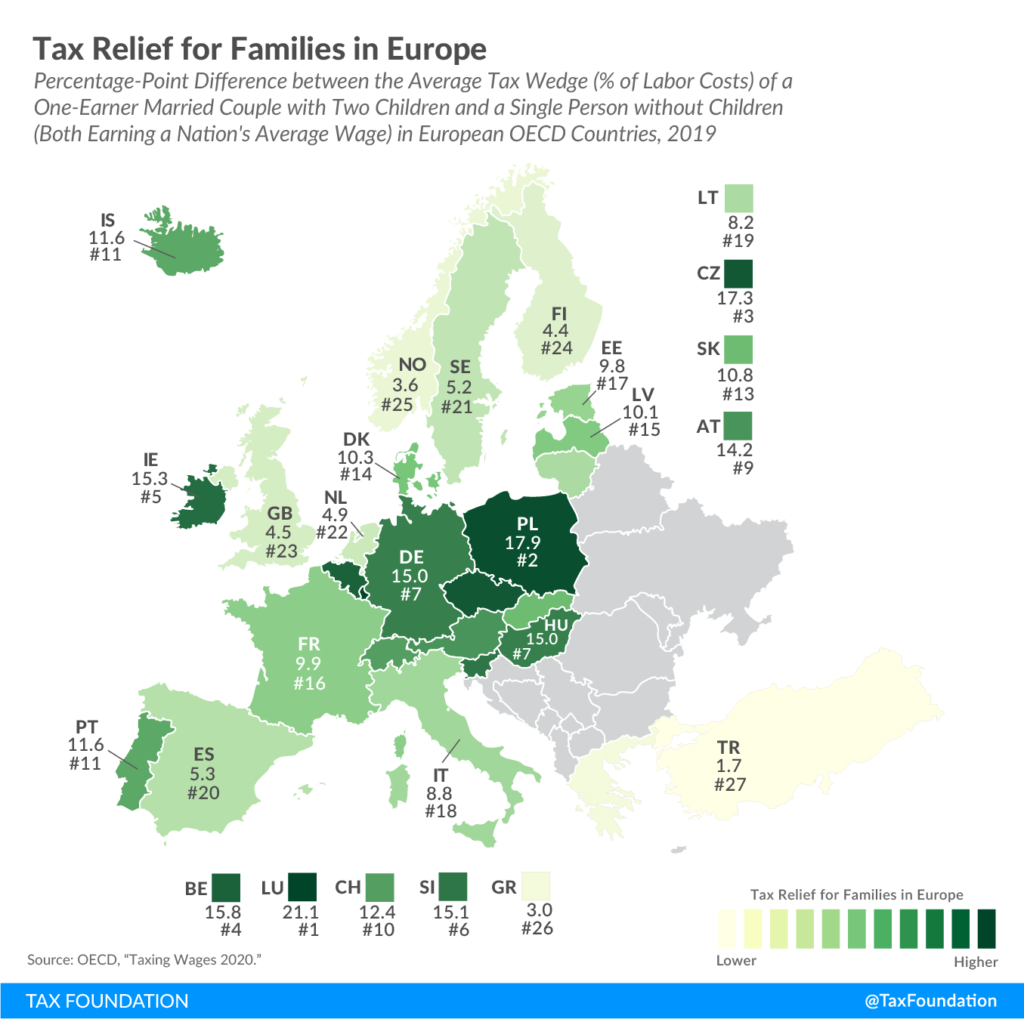
Most countries provide tax relief to families with children—typically through targeted tax breaks that lower income taxes. While all European OECD countries provide tax relief for families, its extent varies substantially across countries. One way to measure targeted tax relief for families is to compare the tax burdens on labor of a family with one…
Read MoreTax Changes in California Governor’s Budget Could Stand in the Way of Economic Recovery
In California, where state officials are projecting a stunning $54 billion deficit, Gov. Gavin Newsom (D)’s budget proposes a range of new revenue options, including an important change to how business income is calculated for tax purposes, eliminating net operating loss carryovers for most businesses for three years. Net operating loss provisions in corporate net…
Read MoreTo What Extent Does Your State Rely on Sales Taxes?
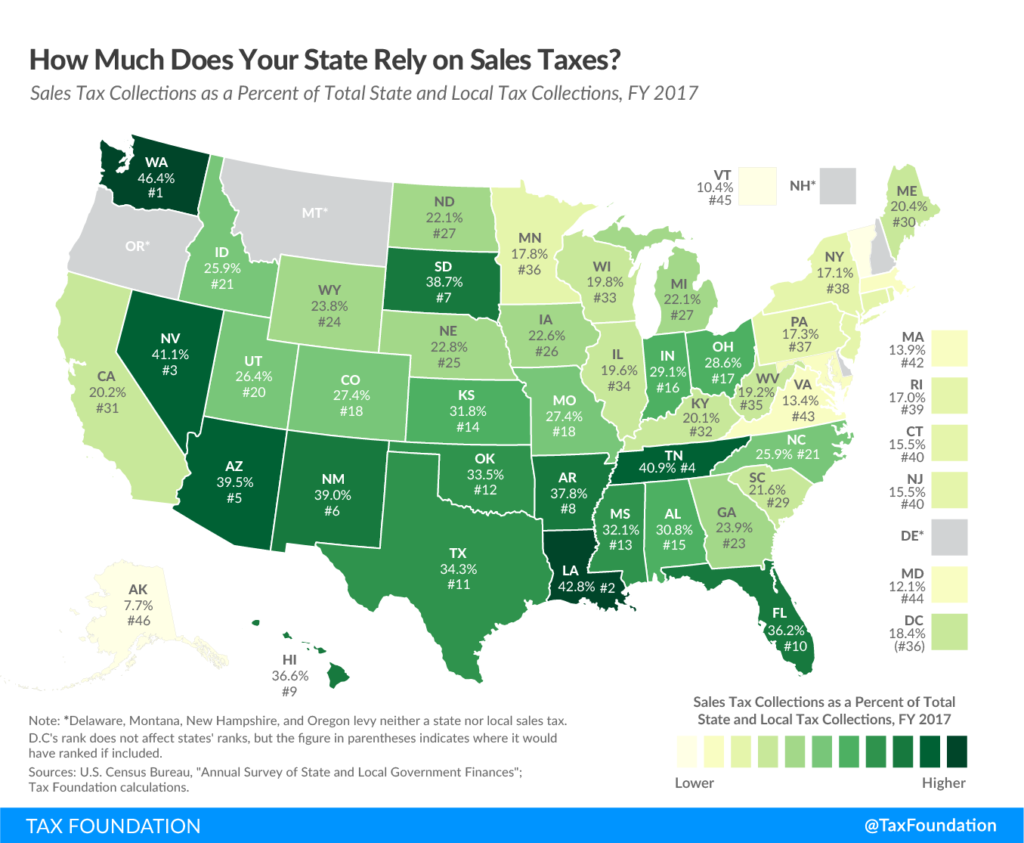
This week’s map continues our look at state revenue sources, this time focusing on revenue collected through the general sales tax. Sales taxes are the second largest source of state and local tax revenue, accounting for 23.6 percent of total U.S. state and local tax collections in fiscal year 2017 (the latest data available; see Facts…
Read MoreHEROES Act Dependent Expansions Come with Major Drawbacks
In a previous post, I outlined portions of the dependent-related provisions in the recently-passed HEROES Act (H.R. 6800), focusing on changes to the EITC, CTC, and CDTC. Although the legislation increases and expands each of the credits, the changes are untimely, intentionally temporary, and lack sufficient stability, simplicity, and transparency. Timing The HEROES Act enters…
Read MoreMore Than Half the States Will Protect Businesses from Certain COVID-19-Related Unemployment Insurance Tax Hikes
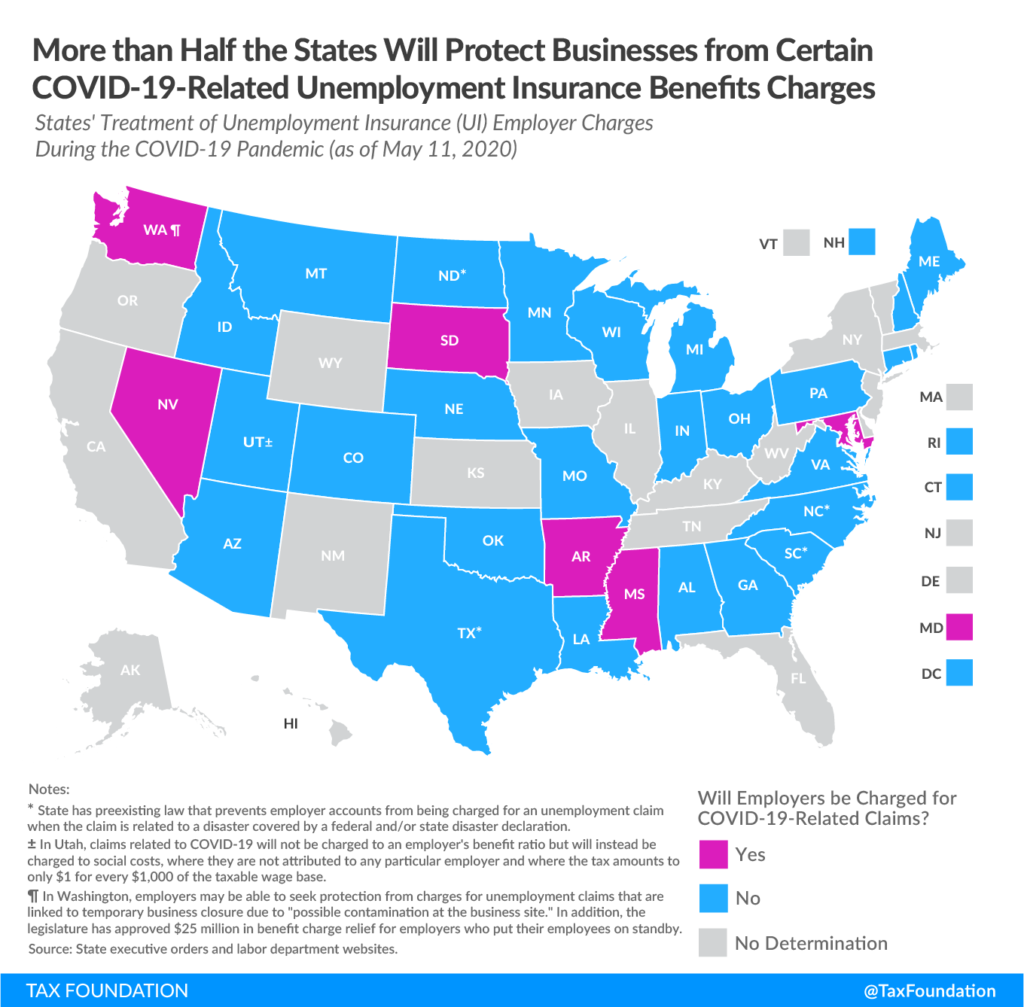
Across the country, unemployment insurance (UI) benefits are playing an important role in helping individuals who have lost work due to the COVID-19 pandemic and associated economic fallout. The Coronavirus Aid, Relief, and Economic Security (CARES) Act, signed into law on March 27, provided a temporary, federally-funded increase in UI benefits and expanded benefits eligibility.…
Read MoreHEROES Act Temporarily Increases Dependent Credit Generosity
Among other revenue provisions (Division B) of last week’s House-passed Health and Economic Recovery Omnibus Emergency Solutions (HEROES) Act, the bill would make changes to certain refundable and non-refundable credits aimed at taxpayers with dependents under the Earned Income Tax Credit (EITC), Child Tax Credit (CTC), and Child and Dependent Care Tax Credit (CDCTC). This…
Read MoreBreaking Down State and Local Aid under the SMART Act
The State Municipal Assistance for Response and Transition (SMART) Act, sponsored by Senators Bob Menendez (D-NJ) and Bill Cassidy (R-LA) in the Senate and by Rep. Mikie Sherrill (D-NJ) in the House, would provide $500 billion in flexible funding to state, local, and tribal governments to backfill lost revenues and otherwise provide fiscal relief during…
Read More