
Tax
Why Do States Tax Illegal Drugs?
Say you came into possession of some illegal drugs. What’s your next move? According to some states, you should immediately pay the state’s tax on…
Read MoreWireless Tax Burden Remains High Due to Federal Surcharge Increase
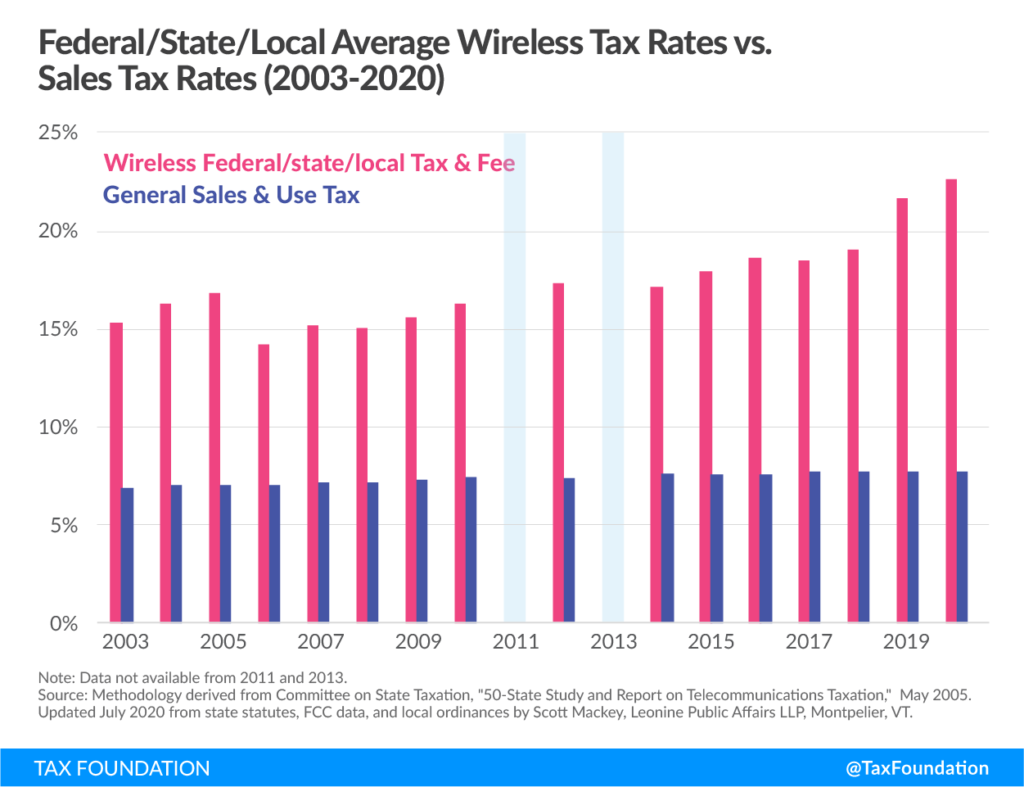
Key Findings A typical American household with four phones on a “family share” plan, paying $100 per month for taxable wireless service, can expect to pay about $270 per year in taxes, fees, and surcharges—up from $260 in 2019. Nationally, these impositions make up about 22.6 percent of the average bill—the highest rate ever. Illinois…
Read MoreBiden Proposed Raising Social Security Payroll Taxes By $740 Billion…And Still Got Elected President
An amazing thing happened in this year’s presidential election. A major party candidate proposed raising Social Security payroll taxes. And won. More than that, it…
Read MoreState Ballot Initiative Results: Tax Cuts for Some, Tax Hikes for Others, and Marijuana Taxes For All
In addition to that other election you might have followed last week, Americans voted on a whole bunch of state tax measures . And while…
Read MoreBiden Could Provide Business and Household Relief by Eliminating Trump Tariffs
One of President Donald Trump’s signature policy actions has been to engage in a tit-for-tat tariff war with America’s trading partners, and one of the big questions is what President-elect Joe Biden will do about that. First, a brief review of where things stand. Relying on rarely used sections of trade law, President Trump used…
Read MoreIncreasing the Tax Burden on Capital Investment and Automation Hurts Workers
Over the past half decade, there has been an ongoing debate about how automation and the use of robots in the workplace has impacted workers’ wages and employment. Recently, economists Andrea Manera and Daron Acemoglu of the Massachusetts Institute of Technology (MIT) and Pascual Restrepo of Boston University examined whether tax policy favors certain forms…
Read MoreNo, We Don’t Need a Federal Work-From-Home Tax
Multinational banks do clickbait too. That’s my analysis of one of the proposals from a recent Deutsche Bank publication titled What Must We Do to Rebuild?—a proposal sure to work up those who work from home. Because, among other short pieces with titles like “The delivery dilemma” and “The case for post-COVID rural investment,” there’s…
Read MoreComparing Europe’s Tax Systems: Property Taxes
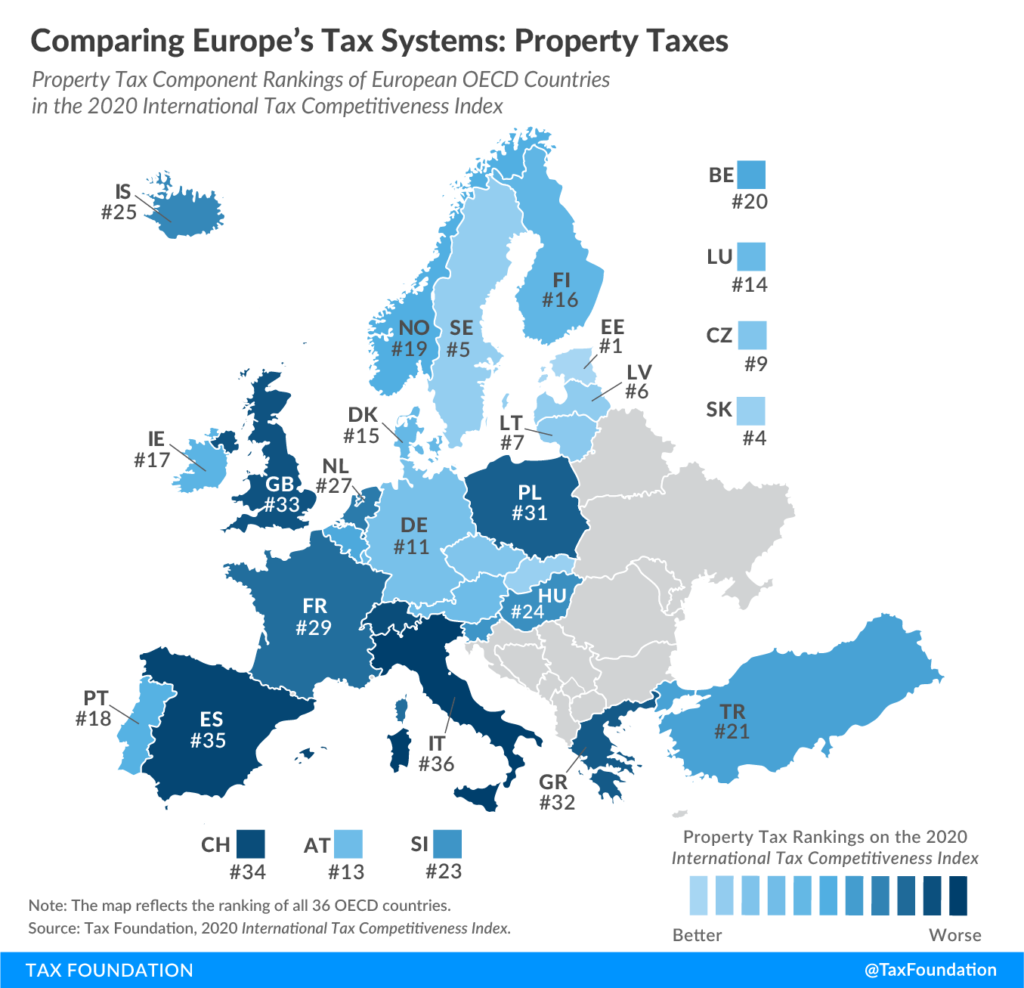
Today’s map shows how European OECD countries rank on property taxes, continuing our series on the component rankings of our 2020 International Tax Competitiveness Index (ITCI). Although an important element when measuring the neutrality and competitiveness of a country’s tax code, property taxes account on average for less than 5 percent of total tax revenue…
Read MoreRanking Individual Income Taxes on the 2021 State Business Tax Climate Index
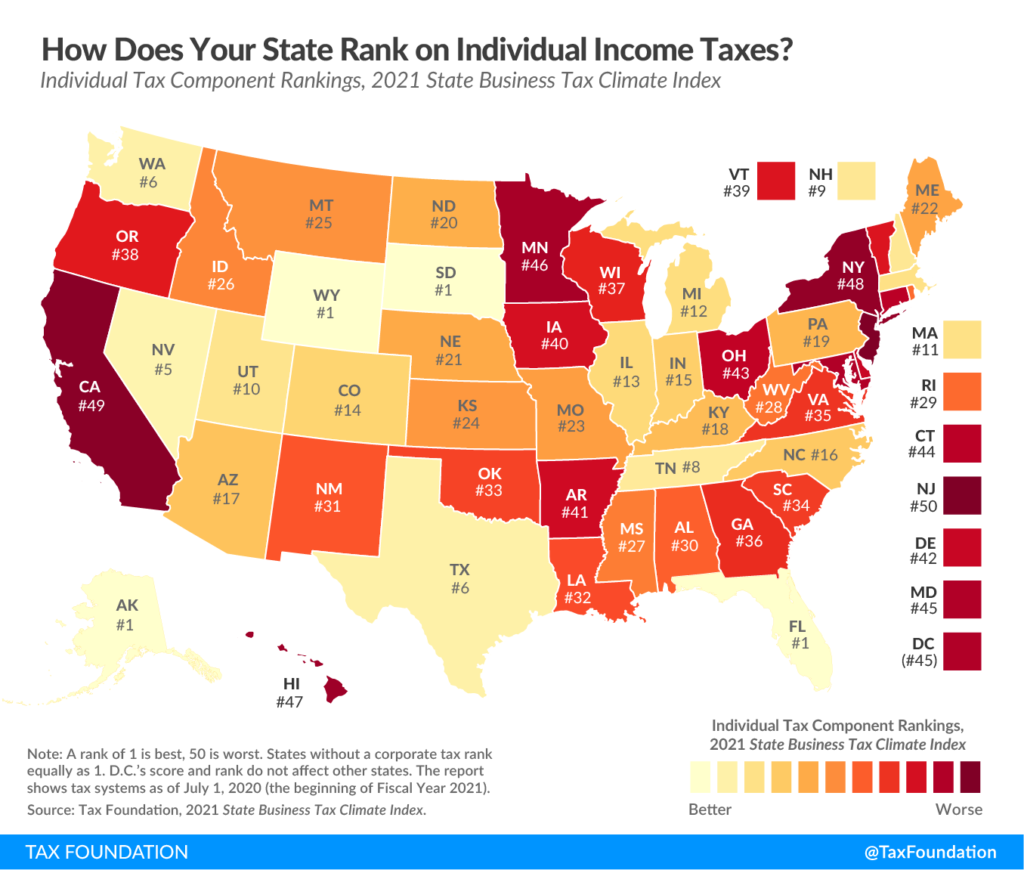
This week’s map examines states’ rankings on the individual income tax component of the 2021 State Business Tax Climate Index. The individual income tax is important to businesses because states tax sole proprietorships, partnerships, and in most cases limited liability companies (LLCs) and S corporations under the individual income tax code. However, even traditional C corporations are…
Read More